9 Questions with Kiritharan Mahalingasivam
Our PhDs are playing a significant role within our program, and in the broader industry.
Kiritharan Mahalingasivam's PhD research at University of Southern Queensland focusses on the structural behaviour and impact performance of pultruded glass fibre-reinforced polymer (GFRP) composite hollow sections for marine and civil infrastructure applications.
It investigates how cross-sectional geometry, impact energy, and loading conditions influence the deformation mechanisms, damage evolution, and failure behaviour of structural-scale composite members under axial and lateral impact loading. The research particularly examines the performance of circular (CHS), square (SHS), and rectangular (RHS) hollow sections under pile-driving and high-energy impact scenarios relevant to marine pile applications.
He describes the aim as establishing the governing mechanisms controlling impact resistance and structural response, and to develop design insights for safer, more efficient, and durable composite structural systems in harsh service environments.
Q1. Under which ACM CRC Research Program does your PhD project sit?
My PhD project aligns with ACM CRC Research Program 1 – Composite Materials, with a focus on structural-scale pultruded GFRP composite systems for marine infrastructure and impact-resistant applications.
Q2. What is the focus of your PhD?
My PhD focusses on the structural and impact behaviour of pultruded glass fibre-reinforced polymer (GFRP) composite hollow sections for marine and civil infrastructure applications.
Q3. When did you become interested in this field?
I became interested in this field during my master’s studies in geotechnical engineering, when a colleague was involved in composite materials research. Learning about the cost-effectiveness, durability, and sustainability of composites motivated me to pursue my PhD in this area.
Further, advanced composite materials offer significant potential for improving the durability and sustainability of marine and civil infrastructure.
Traditional materials such as steel and timber are highly susceptible to corrosion, degradation, and high maintenance costs in harsh environments, particularly in marine applications. In contrast, pultruded GFRP composites provide advantages such as high strength-to-weight ratio, corrosion resistance, and long service life.
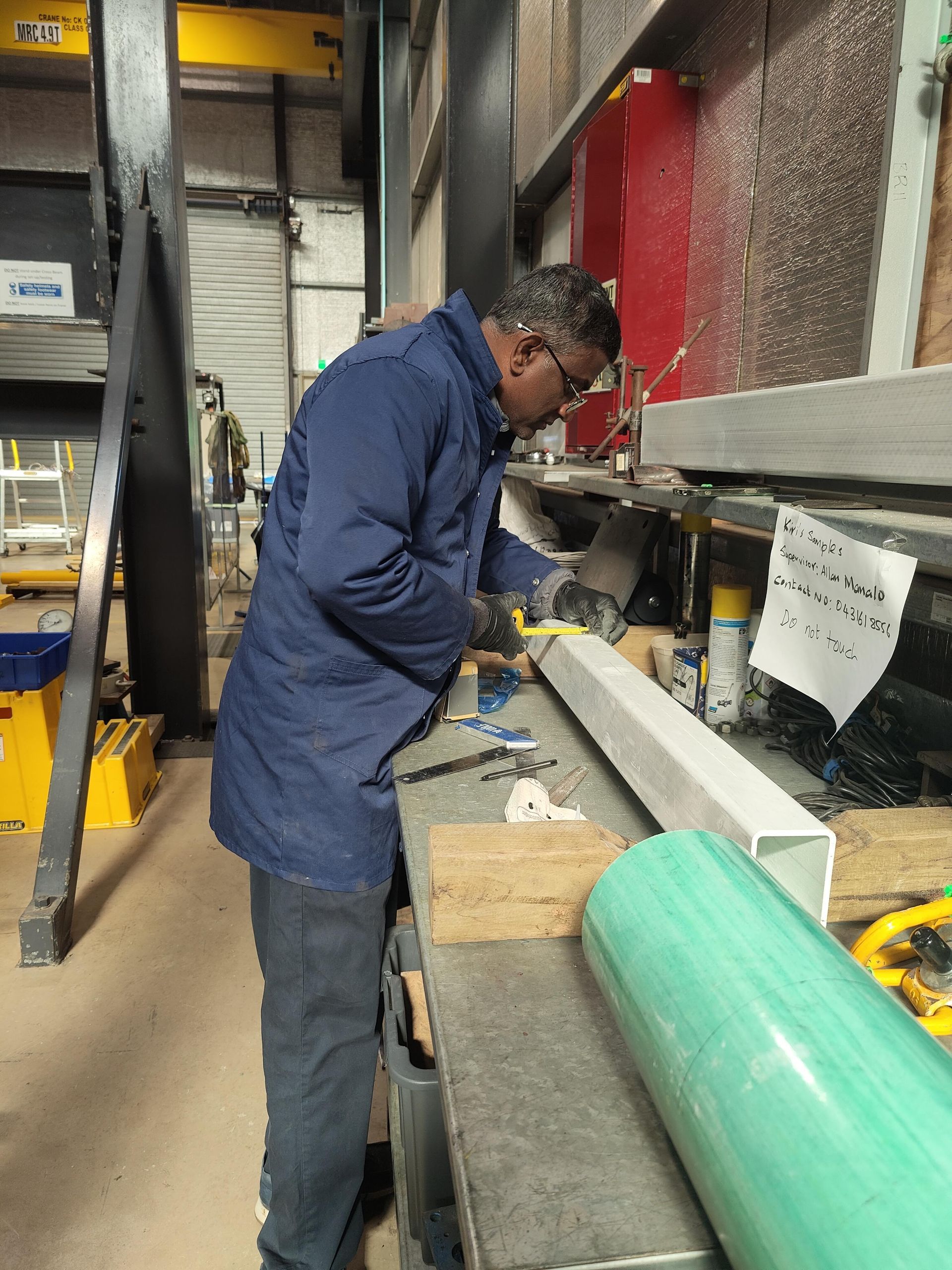
What particularly motivated me was the limited understanding of how structural-scale composite sections behave under high-energy impact and pile-driving conditions. Most previous studies focussed on small-scale specimens and localised material behaviour, leaving a gap in understanding the structural response of full-scale composite members. This motivated me to investigate how cross-sectional geometry and impact loading influence deformation and failure mechanisms, with the aim of contributing to safer and more efficient composite infrastructure systems.
Q4. What made you interested in it?
What interested me in this field was the growing need for cost-effective and sustainable alternatives to conventional construction materials, particularly for harsh marine and infrastructure environments. During my master’s studies in geotechnical engineering, I was introduced to composite materials research through a colleague’s work, and I was surprised by the potential of composites to overcome issues such as corrosion, high maintenance, and reduced service life associated with traditional materials.
As a researcher, I was particularly motivated by the opportunity to work on real structural-scale composite systems subjected to practical impact and pile-driving conditions relevant to industry applications. I felt that this research would not only contribute new knowledge to the field of composite infrastructure but also support the development of more durable and sustainable engineering solutions with real-world impact.
Q5. What do you hope to achieve through your PhD? What challenges are you hoping to solve?
Through my PhD, I hope to improve the understanding of how structural-scale pultruded GFRP composite sections behave under high-energy impact and pile-driving conditions. The research aims to develop design insights for safer, more durable, and sustainable composite infrastructure systems, particularly for marine and coastal applications.
One of the main challenges I am addressing is the limited understanding of the impact behaviour and failure mechanisms of large composite structural members under practical loading conditions. Most existing studies focus on small-scale specimens, which do not fully represent real structural behaviour. My research seeks to bridge this gap by investigating how cross-sectional geometry, stiffness, and impact loading influence deformation and damage progression in full-scale composite sections.
Q6. What are your long-term goals/ambitions?
My long-term goal is to demonstrate that sustainable and durable infrastructure solutions can be achieved through the effective use of advanced composite materials when supported by strong technical evidence and practical engineering design approaches.
I also want to show that composite materials have significant long-term potential in structural and marine infrastructure applications due to their durability, corrosion resistance, and sustainability advantages over conventional materials. Through my research, I hope to support the wider adoption of composite structures and contribute to more sustainable and resilient engineering practices in civil and marine industries.
Q7. What’s the best thing about being an ACM CRC PhD student?
The best thing about being an Advanced Composite Materials CRC PhD student is the opportunity to work on industry-relevant research that has real-world impact. It provides access to collaboration with researchers, industry partners, and advanced testing facilities, allowing me to apply academic research to practical engineering challenges in composite infrastructure applications.
Q8. What one piece of advice would you give to people thinking of undertaking a PhD in the composites manufacturing area?
My advice would be to stay curious and open to interdisciplinary learning, because composite materials research combines aspects of materials science, structural engineering, manufacturing, and sustainability. It is also important to focus on practical industry challenges, as research with real-world applications can create meaningful impact and make the PhD experience more rewarding.
Q.9 Tell us something about you that would surprise/impress people.
One thing that might surprise people is that my research background originally started in geotechnical engineering before transitioning into advanced composite materials. Moving across these fields has given me a broader perspective on infrastructure engineering and helped me approach composite structural problems from both structural and geotechnical viewpoints.
Interested to know more?
Visit our Education and Training page to learn more on our HDR Program, and how it’s helping to achieve industry transformation.